The Core Differences Between Flank and Skirt Steak
Flank steak and skirt steak are not the same cut, despite often sharing shelf space and being used interchangeably in home recipes. Both belong to the broad category of flat, fibrous steaks from the underside of the steer, but they come from different muscle groups with distinct fat contents, grain densities, and cooking behaviors. Flank steak is wider, flatter, and noticeably leaner, cut from the abdominal muscles beneath the loin. Skirt steak is longer, narrower, and ribboned with significant intramuscular fat and connective tissue, originating from the steer's diaphragm.
When cooked, the difference in texture and flavor becomes immediately apparent. Skirt steak has an open, coarse grain structure with deep ridges that catch marinades easily, offering an intense, deeply beefy flavor due to its higher fat content. Flank steak features a tighter, more uniform grain that runs cleanly along the length of the meat. Because flank contains much less fat, it tends to cook more like a lean roast, drying out faster if overcooked past medium-rare.
In terms of yield and price, butcher counters price them similarly per pound, though skirt often carries a slight premium due to heavy demand for fajitas and restaurant service. A standard flank steak typically weighs between one and a half to three pounds as a single solid piece. Skirt steak is sold as long, coiled strips, often trimmed down to one to two pounds each. Knowing which cut you hold dictates whether you need blazing direct heat for two minutes or a controlled sear followed by a resting rest.
Inside Skirt vs. Outside Skirt at the Meat Case
Skirt steak is subdivided into two distinct cuts: the inside skirt and the outside skirt. Commercial grocery stores rarely distinguish between the two on the label, simply packaging both as skirt steak. However, experienced butchers and professional kitchens know that outside skirt is the superior muscle for tenderness and uniform thickness. The outside skirt is attached to the exterior of the chest cavity from the sixth to the twelfth rib, covered by a tough membrane that must be peeled before cooking.
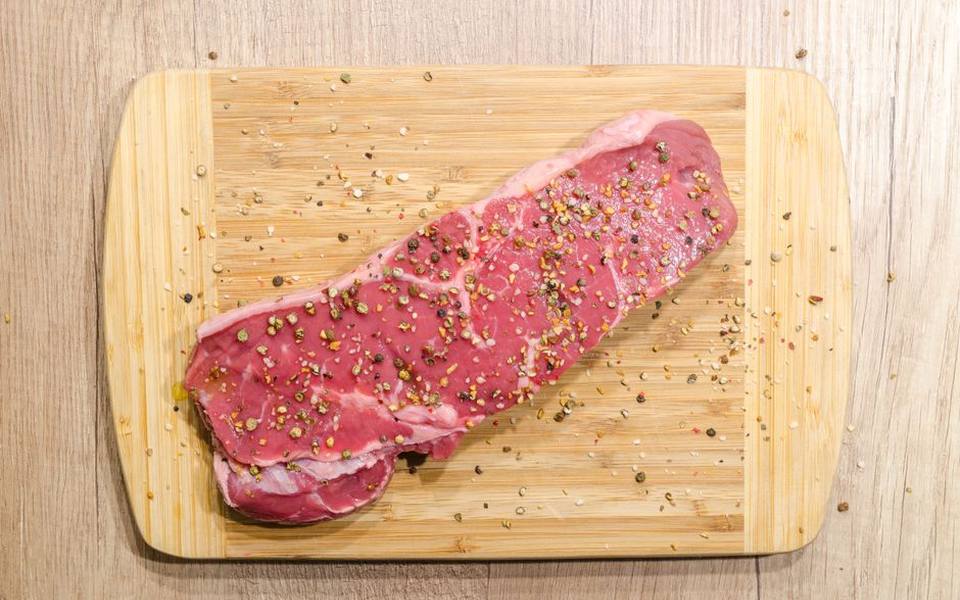
The inside skirt sits deeper within the abdominal wall, attached to the transverse abdominis muscle. It is wider, thinner, and contains tougher connective tissue than the outside skirt. Most outside skirt steaks are purchased directly by commercial restaurant suppliers, particularly high-volume Latin American and Tex-Mex operations, which means the packages you find in retail supermarkets are predominantly inside skirt. Inside skirt shrinks considerably more over high heat and curls if not handled with care.
If you want to secure genuine outside skirt, visiting dedicated custom-cut butcher shops is usually the most dependable route. A local butcher can peel the thick membrane, trim the excess surface hard tallow, and leave the rich marbling intact. When cooking inside skirt, high heat and a very brief cook time are critical to prevent the thinner taper ends from scorching before the center reaches medium-rare.
What Flank Steak Is Called in Different Markets
Walking up to the butcher counter can be confusing because flat steaks carry various regional names, butcher aliases, and international labels. In standard American grocery retail, flank steak is usually labeled simply as beef flank steak or flank fillet. Historically, it has also been called jowl steak or plank steak in select regional butcher traditions, though those designations have mostly disappeared from modern meat display cases in favor of standardized USDA naming.
In traditional French butchery, flank steak corresponds closely to the bavette de flanchet, prized for bistro-style preparations with shallot butter. In British and Australian markets, flank is occasionally grouped into broader frying steak categories or sold under names like thin flank, distinguishing it from the thicker flank cuts that are destined strictly for slow braising or stewing. When shopping in Hispanic butcher counters, or carnicerías, you might see thin flank labeled alongside cecina or prepared cuts, though skirt remains the king of that counter.
Retail packaging can also blur lines between cut names and culinary preparations. A package stamped with flank steak is guaranteed to be that specific abdominal muscle. However, if a label reads simply flat steak or minute steak, check the grain orientation before buying. Flank will always show wide, parallel muscle fibers running lengthwise from one end of the oval steak to the other.
Flap Meat and Bavette Compared to Flank Steak
Flap meat, commonly known as flap steak or sirloin flap, is frequently confused with flank steak, but they are anatomically distinct muscles. Flap meat comes from the bottom sirloin butt, tucked just adjacent to the flank area. In French culinary traditions, this cut is revered as bavette d'aloyau. While flap meat shares a loose, coarse fiber pattern with skirt steak, it possesses a thickness and general flat shape similar to flank steak.
Is flap meat the same as flank steak? No, they come from different primal cuts and perform differently in the pan. Flap meat has a much more open, crumbly texture than flank, with significant marbling woven directly between coarse grain bundles. When seared over high heat and sliced thin, flap meat delivers a more tender bite than flank steak, along with a rich, mineral-forward flavor profile that rivals high-end bistro steaks.
At the retail counter, flap meat typically costs slightly less per pound than center-cut flank or outside skirt, making it one of the best values in beef. It responds exceptionally well to acid-heavy marinades like chimichurri or citrus mojo. For shoppers browsing butcher shops in California and Western states, flap meat is frequently sold untrimmed or pre-marinated under names like carne asada meat or sirloin tips.
Flank Steak vs. Flat Iron Steak
Comparing flank steak to flat iron steak highlights how meat science has modernized retail butchery over recent decades. While flank is an abdominal cut with long, chewy fibers and minimal marbling, flat iron comes from the beef chuck primal, specifically the top blade muscle in the steer's shoulder. Historically hidden within chuck roasts, the flat iron was isolated by meat researchers who removed an internal line of connective tissue, yielding an exceptionally tender, uniform steak.
In terms of tenderness, flat iron easily outperforms flank steak. In fact, research ranks flat iron as the second-most tender muscle on the entire beef carcass, surpassed only by the tenderloin filet mignon. Flank steak requires careful cross-grain carving to achieve tenderness, whereas flat iron cuts cleanly and stays tender even if sliced carelessly. Flat iron also features dense internal marbling that keeps it juicy over direct grill heat.
Where flank steak holds the advantage is surface area and versatility for stuffing. Flank forms a broad, flat sheet of uniform thickness that can be butterflied, layered with cheese, greens, and herbs, and rolled into a pinwheel roast. Flat iron is a denser, rectangular slab that is better suited for standalone grilling, pan-searing with butter, or quick slicing for salads.
The London Broil Confusion and Top Round Cuts
One of the most persistent mix-ups at the butcher counter involves flank steak and London broil. Decades ago, London broil was the name of a finished dish made exclusively with marinated, broiled, and thinly carved flank steak. Over time, supermarkets repurposed the term London broil as a cut name, applying it to thick, lean, inexpensive slabs of top round or round shoulder to help move tougher cuts from the steer's hindquarters.
Today, if you purchase a package labeled London broil in a major supermarket, you are almost certainly buying top round, not flank steak. Top round comes from the rear leg of the animal, a heavily worked muscle group that contains virtually no intramuscular fat. Top round is much thicker, usually two to three inches deep, and has a tighter, denser grain structure than true flank steak. Cooking a top round steak with the quick, high-heat methods suitable for flank will often yield dry, tough results.
When a recipe calls for flank steak or London broil, verify which cut the author actually intends. If the dish involves quick stir-frying or flash grilling, insist on genuine flank steak. If you are preparing a large marinated roast sliced paper-thin for deli-style roast beef sandwiches, an economical top round cut will perform adequately if brined thoroughly and kept to medium-rare.
Flank Steak vs. Top Sirloin and Sirloin Cuts
Top sirloin sits higher up on the steer, between the short loin and the round. When evaluated alongside flank steak, sirloin represents a more traditional steakhouse profile. Sirloin steaks are cut thick, with moderate marbling and a balanced beef flavor that does not require marinades to shine. Flank steak, by contrast, relies on a distinct, fibrous chew and strong grain texture that demands thoughtful knife work.
Texture is where the two cuts diverge most sharply. Sirloin muscles have relatively fine fibers that run in multiple directions depending on how the subprimal was portioned. Flank steak consists of thick, uninterrupted muscle ropes that run strictly end-to-end. Biting into a piece of flank steak cut with the grain feels stringy and chewy, whereas sirloin yields more easily to direct chewing regardless of carving angle.
Cost considerations also influence this choice. In most markets, flank steak and center-cut top sirloin hover in a comparable price range per pound, but sirloin offers a higher meat-to-waste ratio because it requires little trimming. Sirloin is ideal for skewered kebabs, thick individual dinner steaks, and quick pan sears, whereas flank steak excels when stretched across family-style platters, tacos, or noodle bowls.
Marinating Dynamics and High-Heat Cooking Methods
Both flank and skirt steaks respond favorably to marinades, but their structural differences change how they absorb flavor. Skirt steak has wide crevices and deep outer grain fissures that trap oils, citrus juices, soy sauce, and spice pastes instantly. Because skirt steak is thin, marinades penetrate quickly, requiring only thirty minutes to two hours. Flank steak has a compact outer surface that absorbs marinades more slowly, benefiting from four to eight hours in an acidic mixture to help tenderize surface fibers.
Cooking times must be managed strictly according to thickness. Skirt steak should be cooked over the hottest possible coals or in a screaming-hot cast-iron skillet for roughly two to three minutes per side. The goal is to develop a deep brown crust before the center cooks past medium-rare. If skirt steak reaches well-done, the rendered fat drains away and the muscle tightens into rope.
Flank steak requires a slightly more moderate approach to ensure heat reaches the thicker center without charring the exterior to ash. A medium-high grill setup with two heat zones works best: sear the flank for four to five minutes per side over direct heat, then move it to indirect heat if the internal temperature needs a few more minutes to hit the target. Always let both cuts rest on a warm board for eight to ten minutes before touching them with a knife.
Carving Technique: Why the Grain Dictates Everything
No matter how carefully you source or cook a flat steak, incorrect slicing will ruin the eating experience. The golden rule for both flank and skirt steak is slicing strictly perpendicular to the visible grain lines. When you look at the cooked steak, identify the direction of the long muscle strands. Place your knife blade at a ninety-degree angle to those strands, cutting them into short segments so your teeth do not have to work through the long, intact fibers.
For flank steak, holding the knife at a forty-five-degree bias angle produces broader, more tender slices. Because flank is relatively flat, cutting straight down results in narrow, pencil-thin ribbons. Angling the blade creates wider slices with maximum surface area while cutting through multiple layers of muscle fiber simultaneously, ensuring each mouthful is tender and easy to chew.
Skirt steak presents a unique slicing challenge due to its extreme length. A skirt steak can measure eighteen to twenty-four inches long, with grain running across the short width rather than along its length. The proper approach is to cut the long skirt steak into three or four manageable rectangular portions first, rotate each portion ninety degrees, and then slice thinly against the grain across the width.
Finding Quality Flat Steaks at Local Butcher Counters
While big-box grocery stores regularly carry standard choice-grade flank steak, finding properly trimmed skirt steaks, outside skirt, or bavette often requires visiting independent meat purveyors. Across the United States, thousands of local shops maintain artisanal meat cases where butchers can cut specifically to your thickness preferences and trim silver skin cleanly. In regions like butcher shops in Texas, competition for thick, untrimmed skirt steak is especially high due to barbecue and fajita culture.
When consulting your butcher, clarify whether the skirt in the case is inside or outside skirt. Ask them to remove the tough membrane if it has not been done already, as peeling it at home requires a sharp boning knife and a firm paper-towel grip. If you prefer pasture-raised options, specialty shops often carry grass-fed flank, which tends to be leaner and benefits from lower cooking temperatures and shorter cooking windows.
For shoppers exploring specialized regional providers, checking our comprehensive state-by-state butcher directory helps locate independent shops that carry specialty cuts, dry-aged beef, and whole-carcass butchery. Communicating clearly with the person behind the counter ensures you walk away with the exact cut needed for your dinner, rather than an ill-fitting supermarket substitute.
Published 2026-09-20 · reviewed with each rebuild, last September 2026.
Find butcher shops near you
The directory lists 13,556 butcher shops by state and city — pick your state or use the “Near me” button in the header.
More guides
-
 Storage
Storing Fresh Meat and Deli Cuts: Refrigerator and Freezer Timelines
-
 Money
MoneyUnderstanding Beef Prices: Retail Costs, Hanging Weight, and Bulk Buying
-
 Buying
Ribeye vs. New York Strip: Flavor, Marbling, and Texture Compared
-
 Storage
Freezer and Fridge Meat Storage Guide: Shelf Life, Freezing, and Safety
-
 Buying
Ribeye vs. New York Strip: Cut Comparison, Flavor, and Texture
-
 Buying
A Complete Guide to Roasting Prime Rib and Navigating the Butcher Counter
-
 Money
MoneyUnderstanding Beef Costs: From Everyday Retail Cuts to Bulk Whole Cattle Purchases
-
 Owning
Essential Butcher Tools: Meat Thermometer Buying Guide and Knife Sharpening
-
 Buying
Complete Guide to Beef Tenderloin and Filet Mignon
-
 Buying
Bistro Steaks: How to Choose, Prep, and Grill Flank, Flat Iron, Hanger, and Bavette
-
 Buying
Beef Short Ribs, Plate Ribs, and Flanken Cut Guide
-
 Buying
A Guide to Cornish Game Hens, Guinea Fowl, and Specialty Poultry
-
 Buying
Chorizo, Andouille, and Specialty Artisan Sausages: A Practical Guide to World Styles
-
 Buying
Butcher's Guide to Pork Shoulder, Boston Butt, and Country-Style Ribs
-
 Buying
Butcher's Guide to Ribeye, Tomahawk, Cowboy, and Chuck Eye Steaks
-
 Buying
A Guide to Offal, Beef Tallow, Bone Marrow, and Specialty Cuts
-
 Buying
A Butcher's Guide to Deli Meats, Cured Cuts, and Charcuterie Selection
-
 Owning
Butcher Tools Guide: Thermometers, Knife Sharpening, and Essential Supplies
-
 Buying
Corned Beef Brisket: Cut Selection, Home Curing, and Cooking Guide
-
 Buying
Beef Short Ribs and Korean Kalbi Buying and Cooking Guide
-
 Buying
Grass-Fed Beef, Pasture-Raised Meat, and Clean Meat Sticks: A Buyer's Guide
-
 Buying
Pork Spare Ribs, St. Louis, and Country-Style Ribs Guide
-
 Storage
The Practical Guide to Dry Aging Beef at Home and Choosing Equipment
-
 Owning
Butcher's Guide to Rich Chicken Broths and Regional Homemade Soups
-
 Buying
Bacon-Wrapped Jalapeño Poppers: A Complete Butcher's Guide
-
 Buying
A Butcher's Guide to Pork Sirloin Roasts, Stuffed Chops, and Crown Cuts